What takes place after death? Can people get away from pain? What does it mean to really be at peace?
These are questions that have been asked for a very long time. That being said, different religions have different answers.
Some people teach that God saves people. Others are interested in ending pain, being born again, or the circle of life.
Exploring salvation in different religions helps us understand these beliefs better.
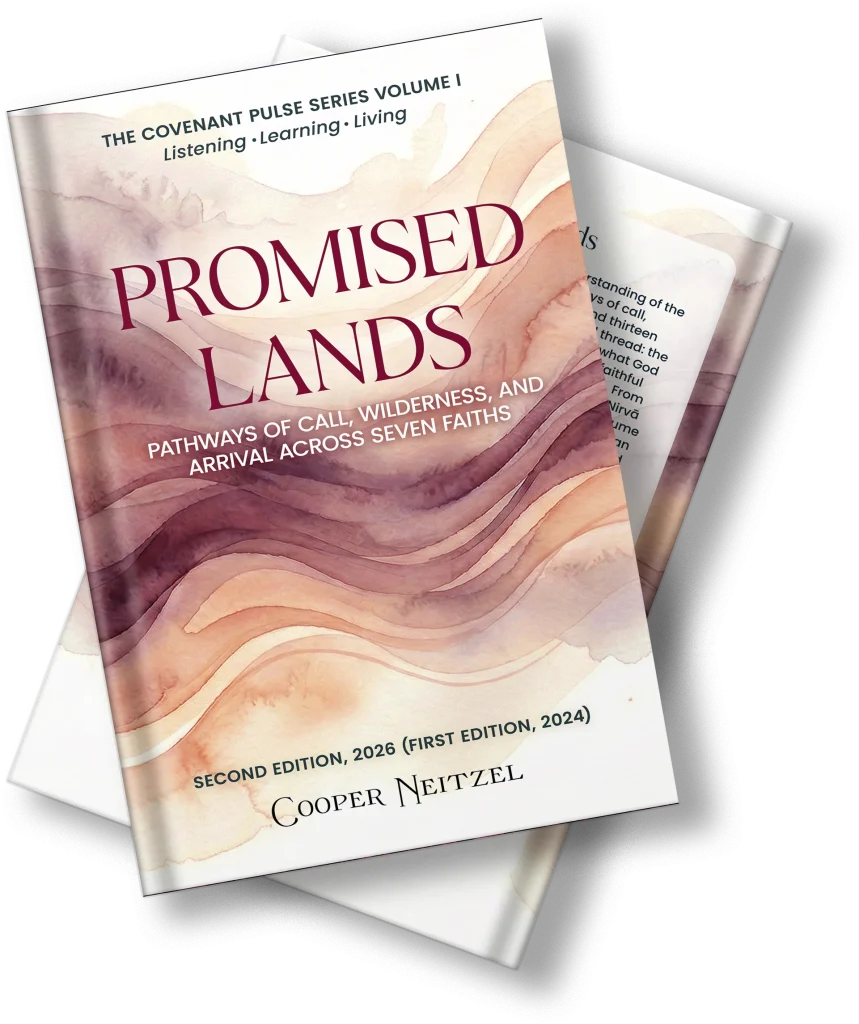
Cooper Neitzel looks at these ideas through the lens of seven different faiths in Promised Lands: Pathways of Call, Wilderness, and Arrival Across Seven Faiths. He doesn’t want people to pick one answer. Instead, he wants them to understand each spiritual journey.
Imagine seven people on the road looking for a better place to stay.
Each one goes in a different direction. But they all want something more than what they are going through now.
In many religions, that imagination explains salvation across religions.
For Jews, hope is linked to God’s promises and bond. Christianity, on the other hand, is based on Jesus Christ as the only way to be saved.
Islam teaches people to be responsible, to be kind, and to hope for Paradise.
In the same way, Hinduism, Buddhism, and Sikhism all talk about freedom from suffering or rebirth, though they have different ideas about how to get there.
The faith of Latter-day Saints also gives a clear way to live forever and become like God.
Cooper Neitzel talks about these differences without making all of the places he visits the same.
Can people earn their way into heaven?
In Christian belief, Jesus Christ is the only one who can save people. Christian salvation and grace are based on the idea that God loves and forgives us.
Christians think that Jesus’ death and resurrection make it possible for people to be saved. So, doing good things doesn’t just earn God’s favor. Instead, faith and grace change a person’s life.
There are different ways that different Christian faiths describe faith, works, and forgiveness. Still, the main hope is to live with God.
What does Islam say about where people go after they die?
Muslims believe people will be judged after death. But it is God’s kindness that is still the main thing that gives them hope.
Jannah in Islam is known as “paradise,” in which people hope to find peace and blessings that last forever.
Good actions, faith, prayer, and alms-giving are all important aspects of Muslim life. But in the end, entrance to Paradise is by the Grace of Allah. Unlike some forms of rebirth, Islam teaches that there is no rebirth on earth, but rather resurrection and judgment.
What if freedom means never having to go through rebirth again? There are many answers to this question available in Hinduism and Buddhism.
There are two different concepts in Hinduism: Moksha and Nirvana.
Hinduism belives in moksha, it means liberation from the cycle of birth and death (samsara).
There are paths of devotion, of knowledge, of action done in discipline. However, according to Buddhist teachings, the cessation of suffering, ignorance, and craving is nirvana.
The three steps of the Buddhist path are those of wisdom, ethical conduct, and meditation.
Both traditions seek to liberate; both have different messages about ultimate freedom and the self.
Judaism connection redemption to God’s promise, living a good life, and the hope of being made whole again.
Sikhism, in contrast, teaches people to love one God, be honest and serve others and let go of their ego.
For Latter-day Saints, theology centers on Jesus Christ, the resurrection, covenants and eternal growth.
It also says that men can progress toward exaltation through Christ.
These religious views of salvation demonstrate the influence of faith on our choices in the here and now and our hopes for the future.
There are lots of books comparing religions. Although in Promised Lands it’s more personal for Cooper Neitzel.
The trip is divided into three parts: Call, Wilderness and Arrival.
First, a spiritual call demands change. Then you struggle, learn and grow in the wilderness. Finally, arriving stands for the hope of every religion.
His Covenant Pulse framework also considers how divine grace impacts people’s reactions.
In this way, readers can compare beliefs without missing the important ways in which they differ.
People who are interested in other religions, theology students, and reading this book will all find it useful.
People who are Latter-day Saints can also compare their views to those of six other religions.
Similarly readers of different faiths can discover new ways to speak about salvation respectfully. The book’s overall message is that we should understand before we judge.
There are different ways that different religions talk about salvation and freedom. Still, people are still drawn together by questions about hope, suffering, and meaning.
Promised Lands gives people a deep way to think about these issues.
Want to know how people of seven different faiths see the path to ultimate hope?
Check out Promised Lands: Pathways of Call, Wilderness, and Arrival Across Seven Faiths by Cooper Neitzel. Get a copy and read it to find out what each way can teach you about faith, life, and looking for meaning.
Living the Pulse looks at faith, meaning, spiritual growth, and how people change as they go through different stages of life.
The book is for people who are looking for spiritual meaning and answers, as well as people who are skeptical and people who believe.
The P-R-A-Y-E-R Sequence looks at Purpose, Resolve, Alignment, Yield, Embody, and Reflection as spiritual growth steps.
Yes, author Cooper Neitzel looks into seven traditions while keeping their own beliefs, ways of life, and spiritual views.
People can learn how faith affects the choices we make every day, how we think, how we serve, how humble we are, and how we live with purpose.
What takes place after death? Can people get away from pain? What does it mean to really be at peace? These are questions that have been asked for a very long time. That being said, different religions

Can seven religions describe the same human longing yet disagree about where it leads? Imagine placing the Jewish vision of Canaan beside the Buddhist idea of Nirvana. One speaks of covenant and sacred land. Buddhism focuses on