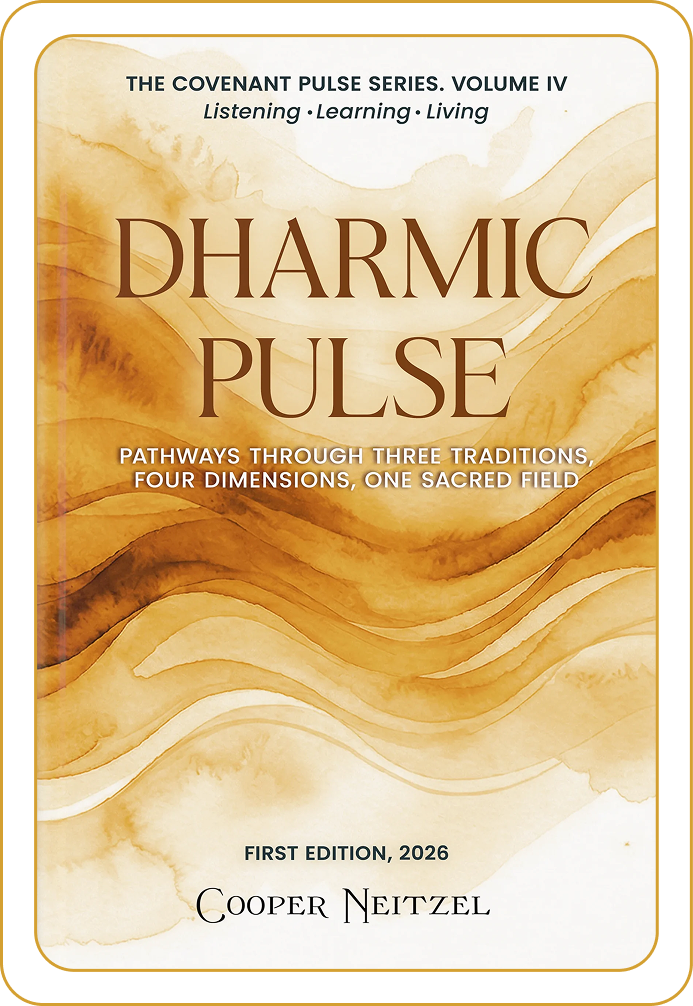
What is liberty? Cooper Neitzel looks at this question in Dharmic Pulse through Hinduism, Buddhism and Sikhism. Each tradition has its own understanding of what keeps people stuck and how a spiritual life can lead to liberation. Neitzel employs sacred texts, philosophy and lived practices to invite readers to listen before comparing. The book does not say that all three religions believe the same thing, but it does consider ancient teachings. Instead it makes room for their differences and the questions they have in common for readers who are interested in eastern religion books this fourth volume of The Covenant Pulse Series is a thoughtful introduction to three living faiths and the paths their adherents continue to walk today. Interesting.
What stops us? How do we alter? What does freedom look like? What kind of help do we get on the way? These questions take Dharmic Pulse through four dimensions: Bondage, Discipline, Release and Gift. Cooper Neitzel first probes their meaning, then considers how Hinduism, Buddhism, and Sikhism respond to them in their own words. The Hindu paths are knowledge, devotion, and action. Buddhism is a teaching of ethics, meditation, and wisdom. Sikhism incorporates remembrance and service into the daily life of the family and the community. Those who will browse religious philosophy books will see a careful comparison which values shared questions and different answers, without forcing one tradition into the language of another. And how their teachings still influence real lives today.
You can learn about another faith without abandoning your own. That idea informs Dharmic Pulse, as Cooper Neitzel approaches Hindu, Buddhist, and Sikh teachings from his openly Latter-day Saint point of view. He does not attempt to judge these traditions by means of familiar Christian categories or to reduce their differing notions of liberation to a single definition. Instead, he immerses readers in their scriptures, practices, and views of the human person. Unlike general books on world religions that race through one belief system after another, this volume takes time with three traditions before bringing them into conversation. It also works as a standalone, so you can pick this up without reading earlier books in the series. And think about their lasting importance.
Dharmic Pulse introduces the beliefs and spiritual practices of Hinduism, Buddhism and Sikhism, helping readers understand how each tradition approaches liberation.
It considers three different concepts of liberation – Hindu moksha, Buddhist nirvana and Sikh mukti – and describes their import within each tradition.
Readers are introduced to teachings from the Bhagavad Gita, Buddhist scriptures and the Guru Granth Sahib, and to the practices that bring those teachings into everyday life.
Yes. It examines yoga, Buddhist meditation, Sikh remembrance and selfless service, illustrating how various traditions approach spiritual discipline.
It provides a focused comparison of three traditions among books on eastern philosophy while allowing each to explain spiritual freedom in its own terms.
I had read about Hinduism and Buddhism before, but this book helped me understand how differently each tradition approaches spiritual freedom.
I appreciated that the author took each religion seriously instead of trying to make their teachings sound the same.
The four main themes gave the book a clear direction. They helped me follow some difficult religious ideas without losing interest.
This book made me think about what freedom means and how everyday habits and beliefs shape the way people live.
I enjoyed learning about three faiths in one book. The comparisons were interesting, especially where their answers were different.