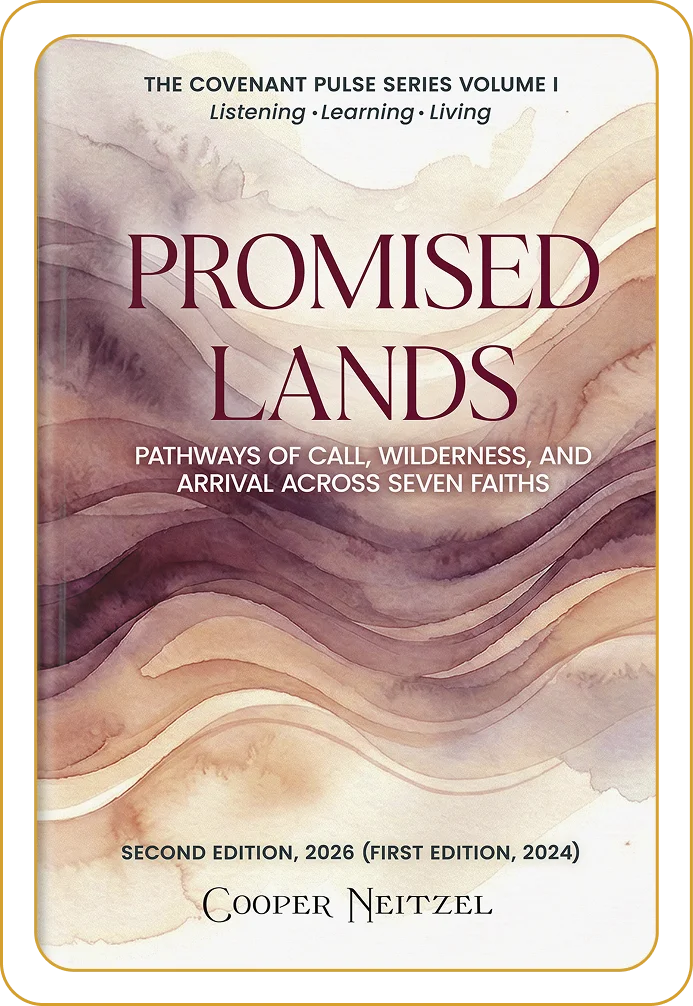
What if the world’s major religions aren’t just giving different answers? What if the same big questions humanity has always asked? Promised Lands starts with that idea and follows it through seven different faiths. Cooper Neitzel looks into how people imagine holy places, deal with spiritual wilderness, and seek greater happiness. He doesn’t force traditions to fit into one framework. Instead, he lets the beliefs and practices of each tradition speak for itself. In this way, readers learn how holy trips affect faith, identity, hope, and change. As a spiritual journey book, Promised Lands gives a unique look at what people look for and how they change as they go.
What happens when we put seven different religions next to each other but don’t ask them to merge? Promised Lands looks at this question from the points of view of Judaism, Christianity, Islam, Hinduism, Buddhism, Sikhism, and the Latter-day Saints. In each religion, there is a unique way to talk about desire, battle, hope, and spiritual satisfaction. Still, patterns that mean something show up when readers pay close attention to their sacred journeys. As a comparative religion book, Promised Lands looks at how people look for places where their inner dreams and pain can find meaning. It uses religious comparison as a way to get people to listen, ask questions, and learn about where different traditions come from.

Transformation is seen as a process in Promised Lands, not an end goal. To begin, a person is called to something bigger. Then, the wilderness tests their faith, sense of direction, sense of who they are, and their ability to keep going. Lastly, getting to the end of the journey gives it meaning without ending spiritual growth. This format helps the book make connections between faith trips from the past and questions that readers still have today. This is one of Cooper Neitzel’s spiritual transformation books, and it makes people think about their own paths, battles, decisions, and goals. In the end, the promised land is more than just a place to get to. In the end, it’s about who we become along the way.
Promised Lands looks at holy journeys and spiritual goals from seven different religions. It looks at how people understand calling, struggle, change, and landing.
Cooper Neitzel doesn’t put religions in order; instead, he lets each one speak for itself through its own history, language, beliefs, and holy knowledge.
People who are interested in religion, spirituality, sacred journeys, comparative theology, and the bigger questions that make up life should read this book.
Yes. The book looks at how callings, time spent in the wilderness, faith, persistence, and the search for spiritual fulfillment can change people.
Yes. People from all walks of life can read the book because it encourages deep thinking and doesn’t require everyone to agree on a single faith point of view.
Promised Lands changed the way I think about holy journeys. The book made well-known questions feel fresh and very personal.
I liked that Cooper Neitzel was open to looking into different traditions without making them give a simple answer. The comparisons made me really think about things.
The journey from calling out in the wilderness to getting there stuck with me. It changed the way I thought about my own spiritual path.
This book makes a link between religion and issues that are still important today. I liked how each practice kept its own style the most
Promised Lands made me think about what I mean by a destination. It made me think about who I am as I get there, which is more important.