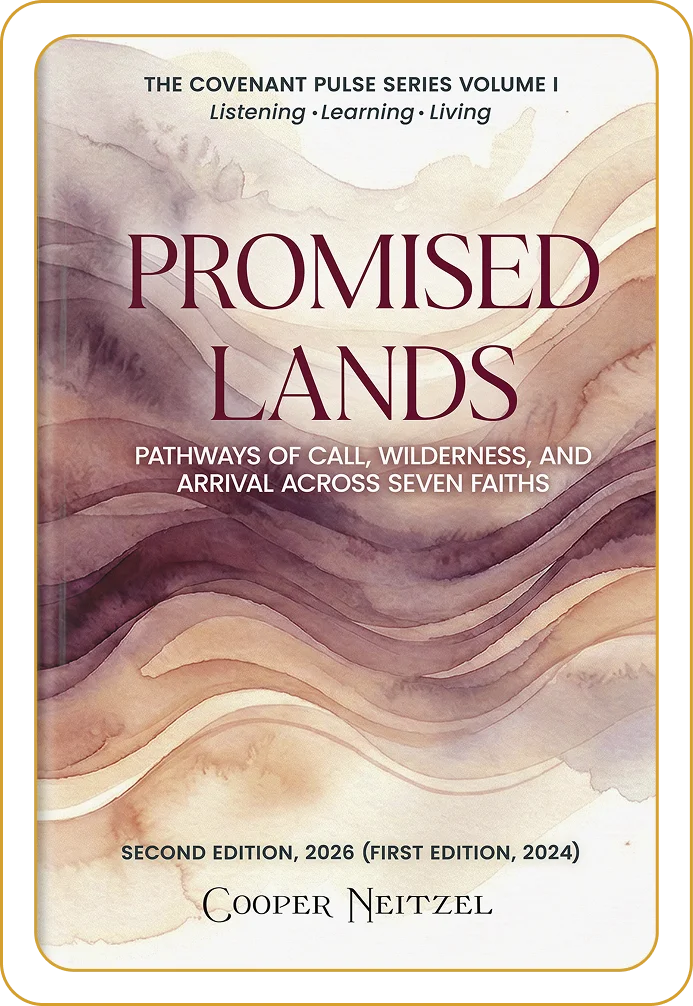
The Covenant Pulse Series by Cooper Neitzel takes readers to the Promised Lands, a serious look at sacred journeys from seven different traditions. The book explores how people from Judaism, Christianity, Islam, Hinduism, Buddhism, Sikhism, and the Latter-day Saint Restoration see holy places. Cooper doesn’t try to make all of these customs the same. Instead, he lets each one share its own ideas and ways of doing things. The book looks at how people deal with uncertainty, change, and seek spiritual fulfillment through the stories of Call, Wilderness, and Arrival. This spiritual book series starts with a question about what people look for and what they change as they do it.
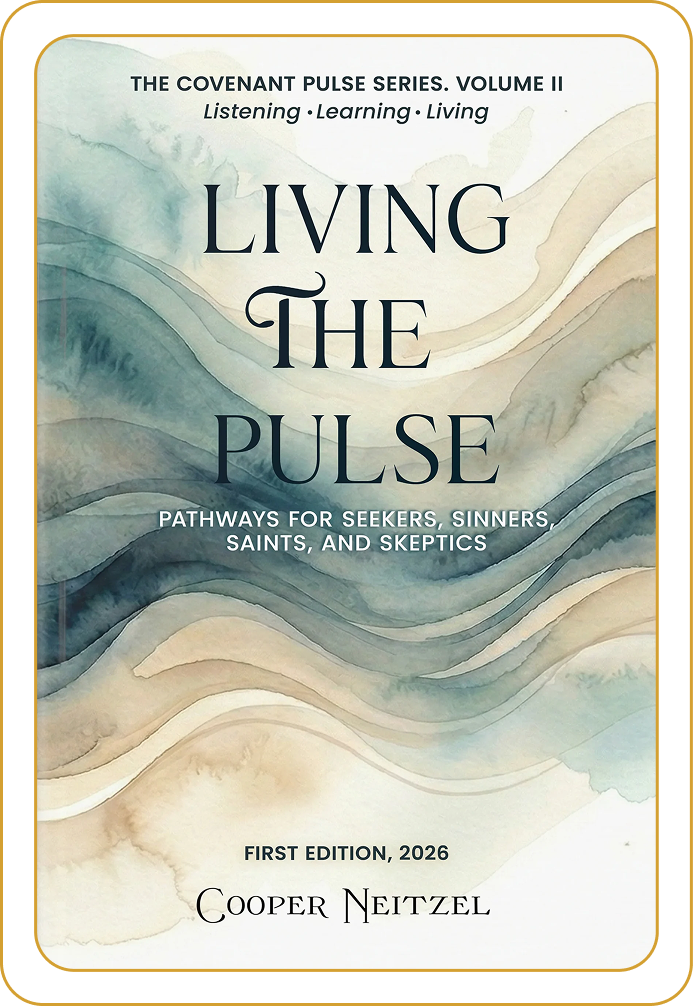
Living the Pulse looks at what happens when religion goes from being an idea to being a part of everyday life. Cooper Neitzel looks at how people grow spiritually by looking at things like purpose, resolve, alignment, surrender, action, and reflection.
The book talks about the PRAYER Sequence, which is made up of Purpose, Resolve, Alignment, Yield, Embody, and Reflection. It also talks about four spiritual seasons: Skeptic, Seeker, Sinner, and Saint. People can look at how beliefs affect decisions, relationships, and personal growth through these movements. Living the Pulse doesn’t just talk about faith as an idea; it asks readers to listen, learn, and live with more purpose.
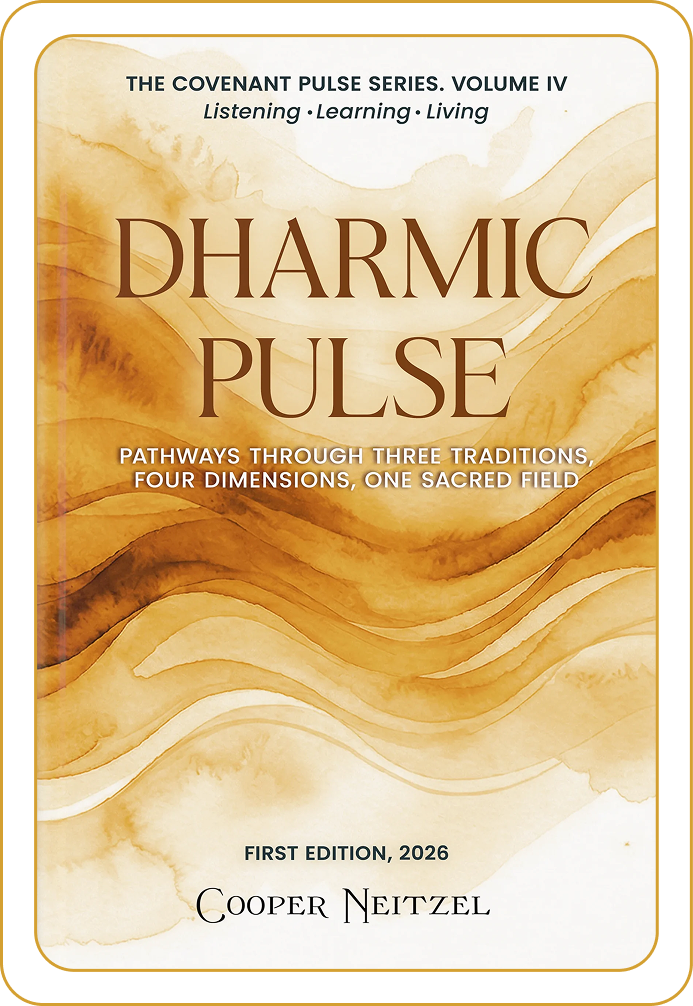
What if the promised land is not first a place to inherit, but a bondage to be released from? Volume IV of the Covenant Pulse Series, Dharmic Pulse: Pathways Through Three Traditions, Four Dimensions, One Sacred Field, explores this profound comparative question by entering a sacred world not organized around covenant at all.
Rather than focusing on promise, lineage, land, and unity, Hinduism, Buddhism, and Sikhism organize human life around liberation. Written with the discipline of truthful listening and a posture of Holy Envy, this volume carefully examines three living traditions on their own terms through their primary texts including the Bhagavad Gītā, the Dhammapada, Pāli Canon suttas, and the Guru Granth Sahib.
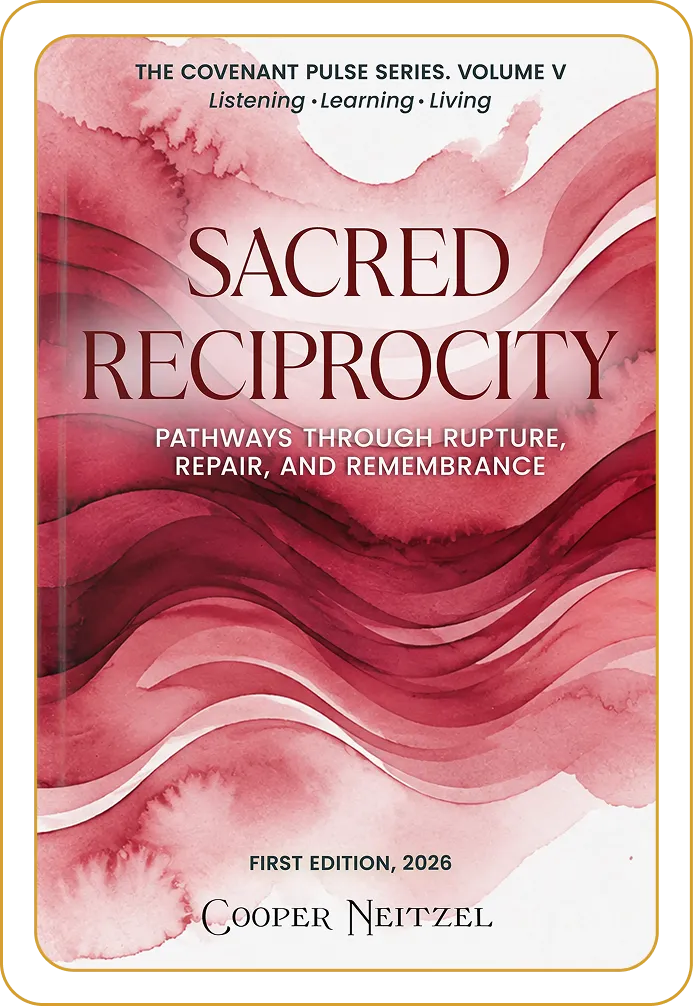
Long before we agree to anything, we arrive already held inside relations we did not choose languages we did not invent, places kept or cleared by others, and lineages of the living and the dead. In Sacred Reciprocity: Pathways Through Rupture, Repair, and Remembrance, Volume V of The Covenant Pulse Series, Cooper Neitzel examines what true receiving asks of us when we step outside the comforts of a spectator’s gratitude.
Listening through three public doorways the Whanganui River and its people in Aotearoa New Zealand, distinct Native and First Peoples of North America, and Yorùbá and Ifá worlds carried across the Atlantic this book traces how relations were denied, overridden, or severed by power, and how they persist under their own authority.
What if the covenant God made with Abraham thousands of years ago is still shaping the faith and identity of billions today?
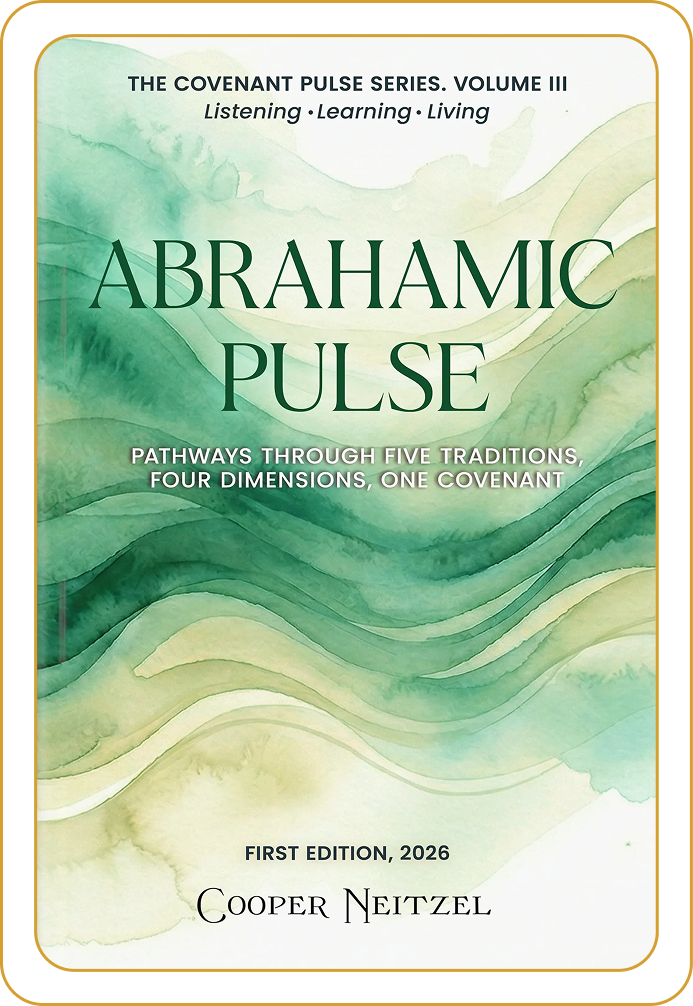
In Abrahamic Pulse, Cooper Neitzel explores the Abrahamic Covenant across Judaism, Christianity, Islam, The Church of Jesus Christ of Latter-day Saints, and the Bahá’í Faith.
Through four powerful themes—Promise, Lineage, Land, and Unity—this book reveals what these traditions share, where they differ, and why those differences matter.
Thoughtful, respectful, and deeply engaging, Abrahamic Pulse offers a fresh journey into Abraham, covenant theology, comparative religion, and interfaith understanding.
One Abraham. One covenant. Five living traditions.
The series looks at faith, heritage, moral development, duty, listening, and real-life questions from a number of different, carefully separated points of view.
Readers who want to think deeply about spirituality, history, real life, moral questions, and careful cross-cultural listening will enjoy this book.
Yes, the books talk about Christianity and other religions with care, but they don’t take away from their own leaders, practices, histories, or meanings.
Even though each book deals with a different set of issues, they all have one thing in common: they want you to listen carefully, learn honestly, and then live a responsible life afterward.
The series asks readers to think about the assumptions they were raised with while always being open to correction, difference, responsibility, and a better understanding of themselves.
The series gave me a way to talk about questions I had been thinking about in private, mostly about faith, duty, inheritance, and the choices I make every day.
I liked how these books respected differences while still making me think about my own spiritual and moral life.
Each book in this series feels like it fits with the others, but each one also brings up new questions that changed the way I read and listened.
The writing made me slow down, pay attention to my assumptions, and think about how learning about another tradition can change the way I pay attention to things.
After reading these books, I didn’t have as many easy answers, but I did have more good questions, more humility, and a desire to live quietly.